The worst festival horror stories and tips on how to survive them.
Music festivals are not just where you go to listen to your favorite bands, they sell you a fantasy: dusty fields turned into wonderlands, strangers who feel like family by day two, bass lines that sync up with your pulse. For a few days, the real world just… stops. But scratch the surface of festival culture and you’ll find a darker thread running through it, stampedes, drug overdoses, structural collapses, deaths that never made the highlight reel. From Burning Man’s mud-trapped exodus to Astroworld’s fatal crowd crush, these are the moments when the party turned into a nightmare, and paradise revealed how fragile it really was.
Burning Man’s Dust Storm Lockdown
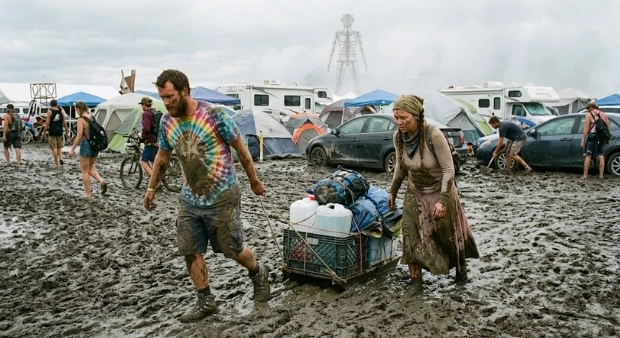
Burning Man has always thrived on extremes, but in 2023, Mother Nature delivered more than participants bargained for. A sudden rainstorm turned Nevada’s Black Rock Desert into a mud pit. Tens of thousands of attendees were trapped, their cars stuck axle-deep in sludge. Toilets overflowed, food supplies dwindled, and internet conspiracy theorists began spreading rumors of an Ebola outbreak inside the festival.
The chaos escalated when organizers asked people to “shelter in place,” a phrase usually reserved for natural disasters and active shooters. Some trudged barefoot for miles through the muck to escape, while others described it as “apocalyptic camping.” One death was reported, later linked to drug use, but the images of burners caked in mud, dragging supplies on makeshift sleds, became the face of the disaster. Burning Man has always been about survival, but this year, survival wasn’t metaphorical, it was literal life and death situation.
Astroworld’s Deadly Crowd Crush
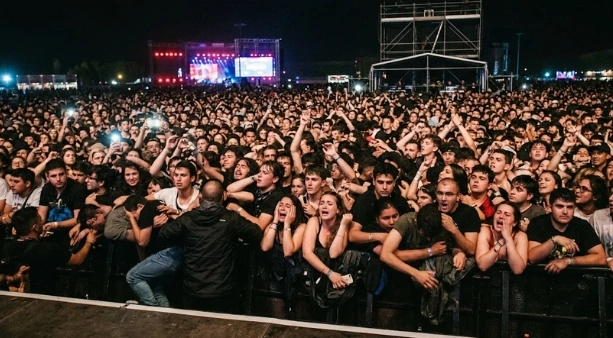
In Houston in 2021, Travis Scott’s Astroworld Festival became one of the darkest events in modern music history. As Scott took the stage, the crowd surged forward. Tens of thousands of bodies pressed into one another, literally crushing concert goers in the front, and people began collapsing. Some were trampled as others screamed for help, their voices drowned by the music. We all remember the eerie clip of Scott facing the crowd, crooning an eerie tune, as the audience were screaming in anguish.
By the end of the night, ten people were dead, hundreds injured. Videos showed concertgoers climbing camera towers to beg staff to stop the show. Lawsuits flooded in against Scott, Live Nation, and event organizers. The tragedy reshaped how festivals view crowd control, becoming a case study in what happens when hype, poor planning, and mass adrenaline collide. Survivors still describe the sensation of being unable to breathe, pinned in a sea of bodies, praying they’d make it out alive.
Colectiv Nightclub Fire in Romania
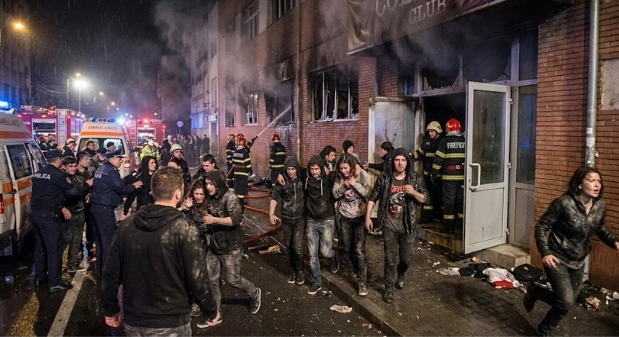
In 2015, a small metal concert at the Colectiv nightclub in Bucharest turned into a national tragedy. Pyrotechnics lit up the stage, but sparks hit flammable foam on the ceiling. Within seconds, the entire club was engulfed in flames. The building had only one exit. Panic set in as hundreds of fans tried to escape through a single narrow door. You can imagine the outcome of a club full of people dressed to the 9s, as they all rush towards one door, trying to escape, without forming a single-file line.
Twenty-seven people died that night, and many more succumbed to injuries in the weeks after. The fire sparked massive protests across Romania, forcing the resignation of the prime minister and multiple government officials over lax fire safety enforcement. Survivors still carry the scars, physical and emotional, from a night meant for music and release that instead became a symbol of corruption and negligence.
Woodstock ’99: The Festival That Ate Itself
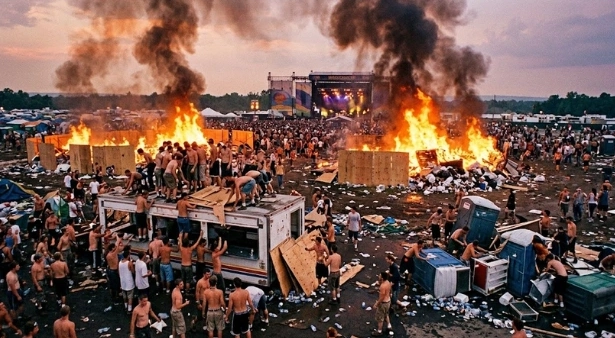
Woodstock ’69 was about peace and love. Woodstock ’99 was about chaos. Held on a former Air Force base in New York during a brutal heatwave, the event quickly spiraled out of control. Water was scarce and sold at inflated prices, bathrooms overflowed. Concert goers were literally passing out from heat stroke and dehydration.
By the time Limp Bizkit took the stage, the crowd was already restless. Fans tore plywood off walls, surfed on debris, and ignited bonfires in the middle of the grounds. Reports of sexual assaults poured in. On the final night, when the Red Hot Chili Peppers performed a cover of “Fire,” attendees lit massive blazes that engulfed the venue. MTV reporters fled the scene. What was meant to be a long-lasting custom of celebration of peace turned into a lawless riot, forever remembered as one of the biggest festival failures in history.
TomorrowWorld’s Mud Prison
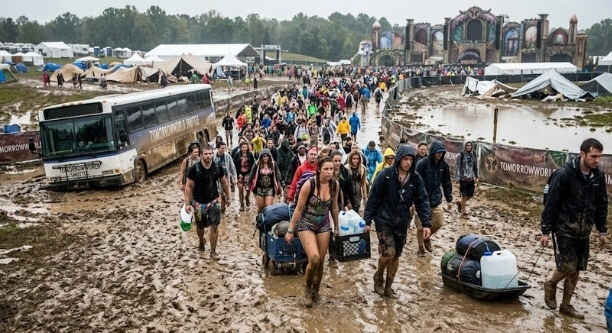
TomorrowWorld, the American spinoff of Belgium’s iconic Tomorrowland, was supposed to bring European megafestival magic to the Georgia countryside. Instead, in September 2015, it brought on a full-blown muddy survival crisis. Days of relentless rain turned the festival grounds closer to a battlefield than a music venue. The soil, already soft from a wet summer, gave out completely. What had been open fields and parking lots became a thick, sucking swamp that swallowed shoes, tents, and eventually the shuttle buses meant to ferry people in and out were completely shut down.
Social media exploded with footage of the aftermath: ravers in glitter, fishnets, and furry boots slogging through waist-deep mud, carrying what little they could salvage on their backs. Some attendees reported walking for hours through the muck just to reach a highway, desperate to flag down any car willing to take them toward civilization. Others described spending the night stranded in the open, with no food, no water, and no cell service to call for help. What was meant to be a weekend of euphoric release turned into something closer to a disaster evacuation, minus the actual evacuation plan.
Electric Zoo’s Fatal Overdose Crisis
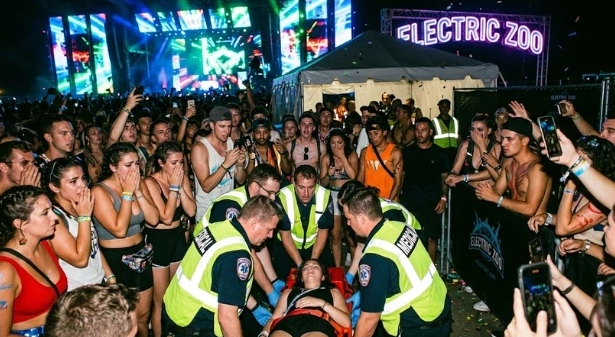
New York City’s Electric Zoo has had its share of problems, but in 2013 the festival was shut down early after two attendees died from MDMA overdoses and several more were hospitalized. The deaths sent shockwaves through the EDM scene, with parents calling for tighter regulations and politicians demanding accountability. On the festival’s second night, 20-year-old Olivia Rotondo and 23-year-old Jeffrey Russ, died after ingesting MDMA. Several others were hospitalized in critical condition, overwhelmed by the heat, dehydration, and the sheer density of the crowd.
For attendees who witnessed it firsthand, the memory wasn’t the music, it was the sight of bodies being carried out on stretchers while thousands of people, many unaware anything was wrong, kept dancing. It became a stark illustration of a problem festivals had quietly lived with for years: the culture of euphoria often outpaced the infrastructure meant to keep people safe.
The Roskilde Festival Crush
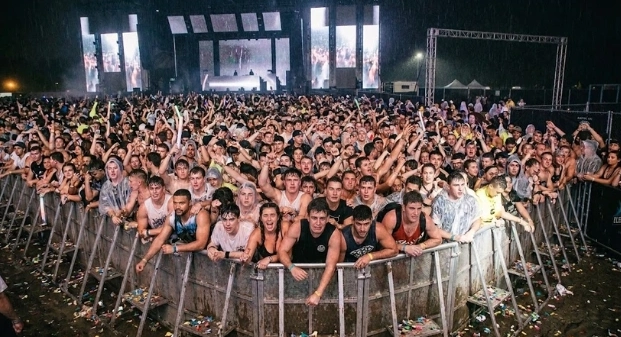
Roskilde, Denmark’s largest music festival and one of Europe’s oldest, had spent nearly three decades building a reputation as a haven for peaceful, communal celebration. That reputation shattered on June 30, 2000, during what should have been one of the weekend’s biggest moments: Pearl Jam’s headlining set. As the band launched into their performance, a massive crowd pushed toward the stage, the kind of surge common at big festival sets. But the ground had turned slick with rain and mud, and as more bodies piled forward, people near the front lost their footing.
Once the first few fell, there was no way for them to get back up. The crowd behind, unaware of what was happening just feet ahead, kept pushing forward, and the weight of thousands compressed those trapped at the barrier. Nine young men, most in their twenties, died of asphyxiation, crushed under the sheer force of the crowd. Dozens more were injured.
The horror unfolded in near silence from those causing it. Screams for help were swallowed by the music and the noise of nearly 50,000 fans, and by the time security and the band realized something was catastrophically wrong, it was already too late for those at the front. Eddie Vedder eventually stopped the performance mid-song, visibly shaken, pleading with the crowd to move back so medics could reach the injured. Video from that night shows a band and an audience realizing in real time that celebration had turned into tragedy.
How to Survive a Festival Without Becoming a Headline
Every story in this list has one thing in common: the people caught in them never expected to become part of a tragedy. They were there for the music, same as everyone else. That’s exactly why a little preparation matters, not because festivals are inherently dangerous, but because the difference between a wild story and a real disaster often comes down to a few basic decisions made in advance.
Learn to read a crowd. Crowd crushes rarely happen instantly. They build. If you feel pressure from multiple directions and can’t move your arms freely, that’s not just uncomfortable, it’s an early warning sign. Experts recommend a simple test: if you can’t comfortably raise both arms above your head, the crowd density around you has crossed into dangerous territory. Get out early, before everyone else has the same idea at once.
Map your exits before you need them. Most people only clock the main entrance. On arrival, take a few minutes to actually walk the perimeter, or at least study the festival map, and identify at least two other ways out. In an emergency, thousands of people will be heading for the exit they know. You want options they don’t.
Hydrate smart, not just often. Dehydration is one of the quietest killers at festivals, especially when combined with heat, alcohol, or drugs. Bring a refillable bottle if the venue allows it, and use the free water stations most festivals are now required to provide. Skip the $8 bottled water lines when you can, they’re a trap for both your wallet and your time in an emergency.
Never do drugs alone, and never take something you can’t identify. If you choose to use substances, go with people you trust, start with a small amount, and know the signs of overdose in others, not just yourself. Many festivals now offer free drug-testing services and harm-reduction tents. Use them. It’s not a moral judgment, it’s the difference between a wild night and a 911 call.
Have a meetup plan with your group, and stick to it. Phones die, service drops, and crowds separate people in seconds. Pick a physical landmark to reunite at if you get split up, and agree on it before the day starts, not during a panic.
Trust your gut over the lineup. This is the hardest one to follow, because it means potentially walking away from a set you paid hundreds of dollars to see. But every survivor account from Roskilde, Astroworld, and TomorrowWorld includes some version of the same sentence: “something felt off before it happened.” If a crowd feels wrong, if organizers seem overwhelmed, if the ground conditions look unstable, leave. The band will play the song again someday. You won’t get a second chance at a crush.
At the end of the day, festivals are still some of the most joyful, connective experiences out there, and the vast majority of festivalgoers go home with nothing worse than sore feet and a great story. But joy and safety aren’t opposites. The people who make it home to tell the story are usually the ones who paid attention when it mattered most.
Also Read:
- Crypto Bro Nightmares: Losing Your Wallet in Real Time
- Passport Bro Horror Stories That’ll Make You Rethink That Trip