There’s a reason so many of us romanticize camping. Sleeping under the stars, cooking over an open flame, and the idea of disconnecting from everyday stress sounds idyllic. But nature doesn’t always play along, and neither do human mistakes. What starts as a peaceful weekend getaway can flip into a survival story in the blink of an eye.
Here are some of the most harrowing camping disaster stories —real events that prove you should never underestimate the wilderness.
Camping Disaster Stories
Flash Flood Horror on the Guadalupe River
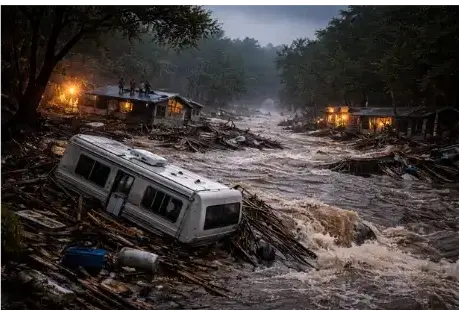
It was supposed to be a laid-back Fourth of July weekend in Texas Hill Country. Fireworks. River tubing. RV lights glowing along the waterline. At the HTR Texas Hill Country Resort in Kerrville, families settled into cabins and campers fell asleep to the steady sound of rain tapping on roofs. Nothing about that night felt unusual. Hill Country storms happen all the time.
By the time most guests were asleep, heavy rainfall had swollen the Guadalupe River far beyond its normal banks. Around 4 a.m., a wall of floodwater tore through the campground with violent speed, ripping cabins from their foundations and dragging RVs downstream like plastic toys. Cars slammed into trees. Power went out. Screams cut through the darkness.
People honked car horns to wake neighbors as water rushed into cabins. Parents smashed windows to get children out. Some climbed onto rooftops as the current ripped everything else away.
Twenty-three-year-old Jayda Floyd was there with her fiancé, sharing the trip with his younger stepsiblings. As water surged into their cabin, she helped lift the kids onto the roof, pushing them higher as the flood rose. In those frantic minutes, survival became instinct. According to reports, Jayda and others were swept away while trying to get everyone to safety.
Multiple lawsuits now claim the resort ignored repeated flood warnings issued earlier that night and failed to notify guests in time. Families say they were never told to evacuate, never warned the river was reaching dangerous levels.
By sunrise, the resort looked unrecognizable. Cabins lay splintered along the riverbanks. RVs were mangled in trees. Personal belongings were scattered for miles. For survivors, the sound of rushing water still triggers panic. For the families who lost loved ones, the question lingers painfully: if someone had warned them, would anyone have died at all?
Carbon Monoxide: The Silent Killer in a Tent
Jack Saunders was exactly the kind of person you trust in the outdoors. At just 21 years old, he was already a scout leader, someone parents felt safe handing their kids over to for weekends in the woods. He knew how to pitch tents in the dark, how to build fires, how to keep a group calm when the weather turned. He wasn’t reckless. He wasn’t inexperienced. That’s what makes what happened so unsettling.
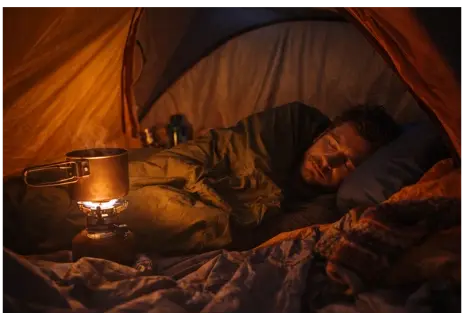
On a camping trip in England, Jack crawled into his tent with a small gas stove. It was cold. Windy. The kind of night where cooking outside feels miserable and unsafe. Using the stove inside probably felt like a practical decision. A way to get warm. A way to eat without fighting the elements. Nothing about it seemed dangerous in the moment.
Carbon monoxide doesn’t warn you.
It has no smell. No visible smoke. As the stove burned, the gas seeped silently into the sealed tent, displacing oxygen with every breath. Jack wouldn’t have felt pain or panic. At most, he may have felt sleepy and disoriented. The kind of exhaustion you shrug off after a long day outside. Then he lost consciousness.
There was no struggle. No chance to realize something was wrong. By the time anyone might have noticed, it was already too late. Jack died alone in his tent, the stove still beside him, the danger completely invisible. His body wasn’t discovered for days.
The idea that someone so capable, so trusted, could die this way rattled the scouting community. Leaders and parents alike were forced to confront an uncomfortable truth. Experience doesn’t protect you from invisible threats like carbon monoxide.
Toddler Burned by an “Extinguished” Campfire
The Dampier Peninsula in Western Australia is the kind of place families go to slow down. Red dirt. Wide skies. Quiet beaches. Danella D’Antuoni and her family were enjoying exactly that kind of peaceful camping trip when everything went wrong in seconds.
The campfire from the night before had been “put out.” Or so it seemed.
In the morning light, the fire pit looked harmless. Covered with dirt. No smoke. No heat visible on the surface. As Danella turned her attention elsewhere, her 18-month-old son Alby toddled across the campsite, doing what toddlers do best, exploring without fear.
His feet sank straight through the thin layer of dirt into glowing coals beneath.
The pain was instant and overwhelming. Danella would later say the scream that came out of her son didn’t sound human. It was primal. Horrified, she grabbed him as his feet blistered almost immediately. The family rushed him for medical help, but the damage was already severe.
Doctors diagnosed circumferential burns, deep enough to threaten circulation and mobility. Alby endured weeks of treatment, bandaging, and monitoring. His parents lived moment to moment, watching for signs of infection or complications. Every dressing change was agony.
Danella later shared their story not for sympathy, but as a warning. Campfires can stay dangerously hot long after flames are gone. Burying them isn’t enough. Dirt traps heat. The coals beneath can stay hot enough to cause life-changing burns hours later.
A Burned Thumb That Cost Two Legs
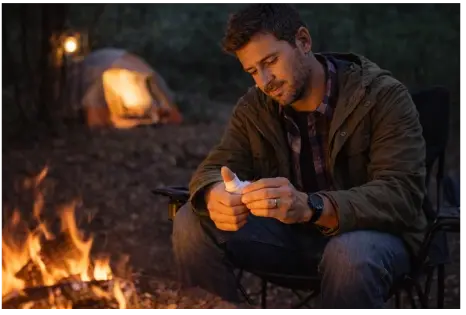
When Max Armstrong burned his thumb while cooking pasta on a camp stove in Colorado, it barely registered as an emergency. It was the kind of thing campers laugh off. A quick rinse. Maybe a bandage later. Nothing that would ruin a trip. But bacteria don’t care how small a wound looks.
The burn became infected with group A strep, a fast-moving and aggressive strain. Within days, Max felt violently ill. Fever. Confusion. Pain spreading through his body. By the time he reached the hospital, the infection had escalated into sepsis, a condition where the body’s immune response turns lethal.
Doctors put him into a medically induced coma. His organs began to fail. To save his life, surgeons had to amputate both legs. There was no other option.
Max woke up weeks later to a reality he never imagined. A camping trip injury that started with a burned thumb had permanently changed his body. Rehabilitation would take months. Learning to walk again, years. The psychological weight hit just as hard as the physical loss.
Lost with Only Peanuts and a Dog
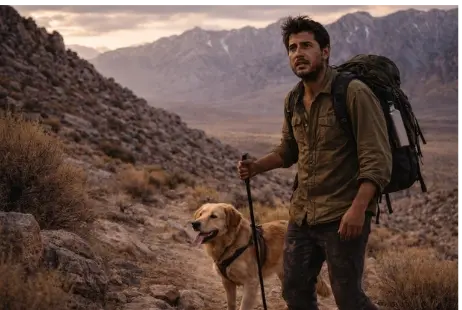
Daniel Solwren thought it would be a simple hike where he could relax and do some self-exploration. California’s Caribou Wilderness was quiet, remote, and familiar enough that he didn’t feel the need to overpack. He brought his dog, Mazie. A little food. Basic gear. The plan was to be back before anything could go wrong. That confidence vanished with a single wrong turn.
At first, Solwren didn’t panic. Trails can get confusing. He doubled back. Tried to recognize landmarks. But the forest didn’t give anything back. Trees blurred together. The ground looked the same in every direction. Minutes turned into hours, and the sinking realization hit. The trail was gone.
By the time the sun started dropping, the wilderness felt different. Louder. Colder. Less forgiving. Solwren wasn’t just off course anymore. He was completely alone in dense backcountry with no clear exit, limited supplies, and night closing in fast.
He took stock of what he had.
One pound of peanuts.
That was it.
Over the next three nights, those peanuts became survival rations. A handful at a time. Enough to keep his body functioning, not enough to feel full. He melted lake water to drink, careful not to waste energy. As temperatures dropped at night, he dug a shallow trench in the sand to block the wind and curled up with Mazie, pressing close for warmth. The dog never left his side.
Each night was a mental battle. The cold seeped in. Fear crept closer. The thought that no one might find him played on repeat. In places like Caribou Wilderness, people disappear quietly. No crowds. No cell service. No guarantees. What kept Solwren alive wasn’t luck or strength. It was discipline.
He didn’t wander blindly or burn energy in panic. He stayed where he could be seen. He conserved food. He thought through each move. Mazie, calm and steady, became more than a companion. She was a reason to keep going.
On the third day, the sound of a helicopter broke the silence. Search and rescue had spotted him. Solwren made himself visible, signaling with everything he had left. Moments later, he and Mazie were lifted out of the wilderness, exhausted, dehydrated, but alive. A survival story that could have ended very differently if panic had taken over.
Avalanche Survivor with Nothing but a Journal
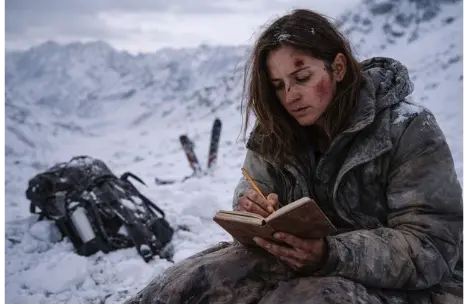
Tiffany Slaton was camping alone in the Sierra Nevada when the avalanche hit. One moment she had shelter, supplies, and a plan. The next, snow and debris wiped out nearly everything she owned. Her leg was injured. Her gear was gone. Suddenly, survival wasn’t theoretical. It was immediate.
With no stove, limited clothing, and no way to call for help, Slaton melted snow for water and foraged for wild berries. Movement was slow and painful as she dragged her injured leg along the snow, but staying still wasn’t an option. Over two weeks, she hobbled more than 20 miles through brutal terrain.
What kept her grounded was a journal.
She wrote to herself. To loved ones. To the future version of her that might survive. The act of writing gave her structure when everything else had collapsed. Each entry became proof that she was still thinking clearly, still fighting.
When she finally stumbled upon a remote cabin, exhausted and injured, it felt unreal. Rescuers later said her mental resilience was just as impressive as her physical endurance. The journal wasn’t just a record. It was a survival tool.
Lessons Learned: How to Avoid Your Own Camping Nightmare
While freak accidents can’t always be prevented, many of these tragedies share common mistakes. Here are some key takeaways for safer camping:
- Know the Terrain and Weather: Always check flood zones, avalanche risks, and storm warnings before pitching your tent. If locals or rangers warn you, take it seriously.
- Never Assume a Fire Is Out: Extinguish every campfire with plenty of water, stir the ashes, and repeat until cold to the touch. Dirt alone isn’t enough.
- Treat Every Injury Immediately: Even a small burn or cut can escalate. Clean wounds, keep them covered, and watch for signs of infection.
- Don’t Cook Indoors: Gas stoves, grills, and heaters release carbon monoxide. Only use them outdoors or in well-ventilated areas.
- Carry Survival Basics: Water purification tablets, high-calorie snacks, a first-aid kit, and a satellite beacon can turn a nightmare into a rescue.
- Tell Someone Your Plans: Always let a friend or family member know where you’re going and when you plan to return.
Also Read:
- Passport Bro Horror Stories That’ll Make You Rethink That Trip
- Festival Horror Stories: From Burning Man, Woodstock, To AstroWorld